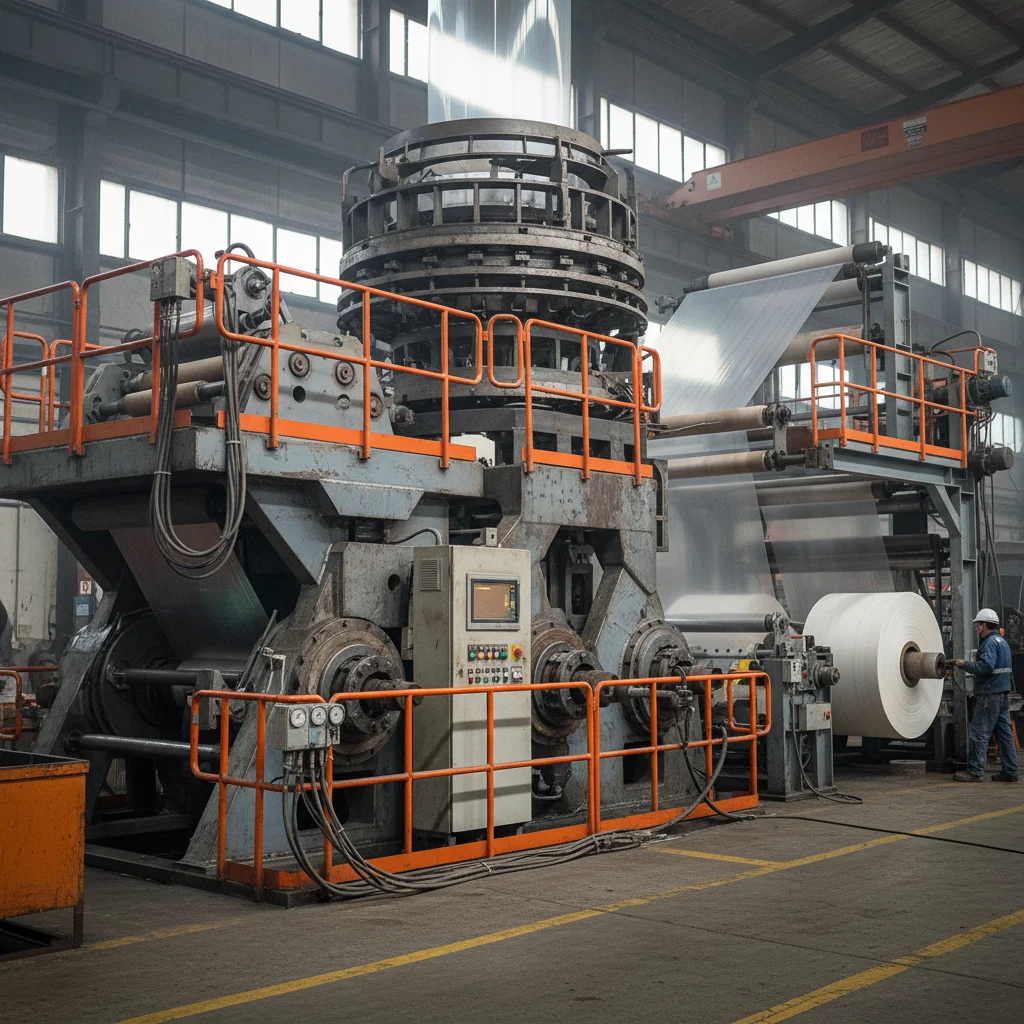
The film blowing process is a fundamental technique in plastics manufacturing, critical for producing continuous rolls of plastic film used in a vast array of applications, from packaging and agriculture to construction and healthcare. Globally, the demand for plastic film is steadily increasing, driven by population growth, expanding consumer markets, and the need for protective and versatile materials. Understanding this process is paramount for engineers, manufacturers, and anyone involved in the plastic industry supply chain.
The economic significance of film blowing is substantial. The global plastic films market was valued at USD 37.98 billion in 2023 and is projected to grow at a compound annual growth rate (CAGR) of 5.2% from 2024 to 2030 (Source: Grand View Research). This growth is fuelled by the increasing demand for flexible packaging, especially in the food and beverage industry, and for agricultural films used to enhance crop yields. The process itself is a key driver of innovation in materials science and manufacturing technology.
Furthermore, advancements in film blowing technology are directly addressing sustainability concerns within the plastics industry. The development of biodegradable films and improved recycling processes, coupled with more efficient film blowing techniques, are vital steps towards reducing plastic waste and mitigating environmental impact. A thorough grasp of the film blowing process is essential to navigating these challenges and fostering a more sustainable future for plastics.
Introduction to the Film Blowing Process
The film blowing process stands as a cornerstone of modern polymer processing. It’s a continuous extrusion process where molten plastic is extruded into a thin tubular film, often referred to as a ‘bubble’. This bubble is then inflated with air to achieve the desired diameter and thickness. The versatility of this method allows for the creation of films with varying properties, catering to diverse industrial needs.
Central to its widespread adoption is the process’s adaptability and efficiency. Different types of polymers – polyethylene (PE), polypropylene (PP), polyvinyl chloride (PVC), and others – can be processed using film blowing, each requiring specific adjustments to temperature, pressure, and die design. This broad compatibility makes it a go-to solution for numerous packaging and industrial applications.
Defining the Film Blowing Process
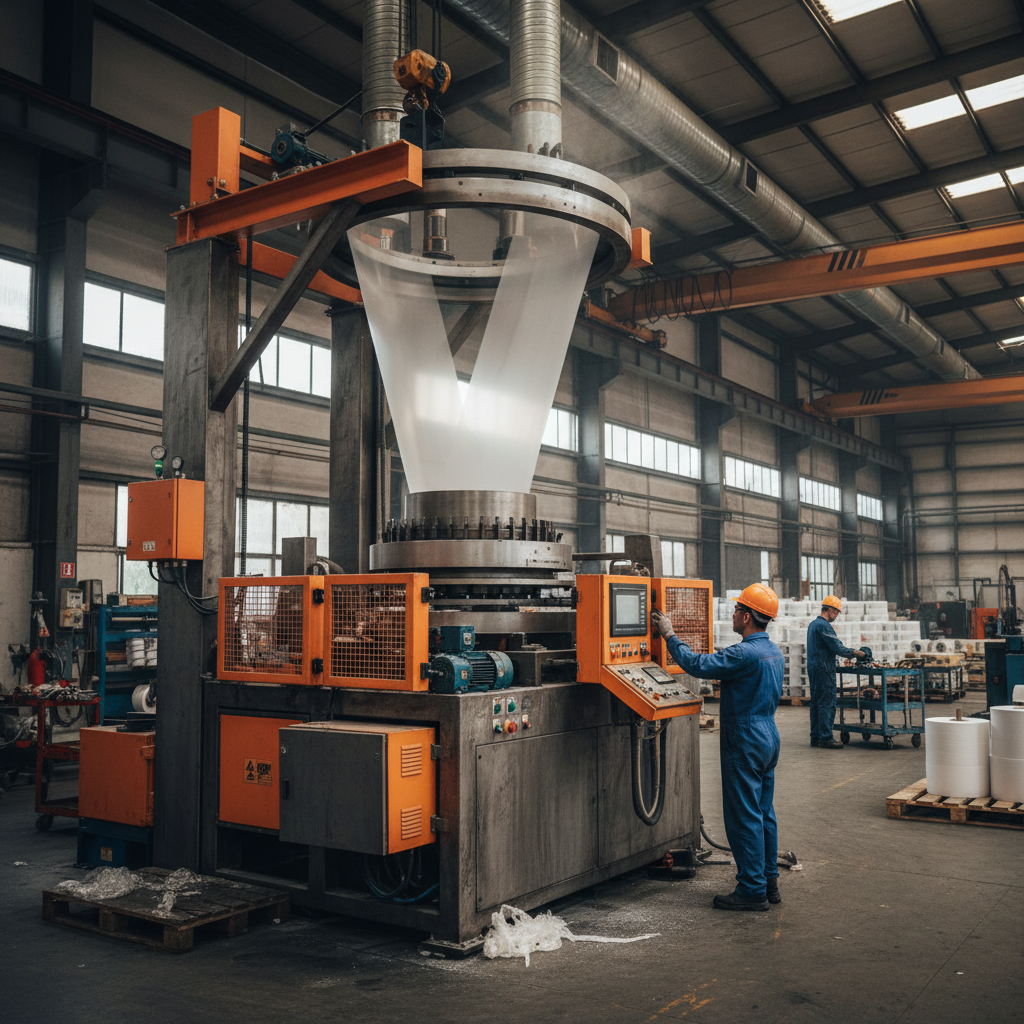
In essence, the film blowing process transforms plastic resin into a continuous, thin-walled tube of plastic film. The process begins with feeding plastic pellets into an extruder, where they are heated and melted. This molten plastic is then forced through a circular die, forming the initial tube shape. Air is introduced into the tube, inflating it to the desired dimensions.
The inflated tube, or 'bubble', is then cooled using air knives or internal cooling systems, solidifying the plastic into a stable film. Finally, the film is flattened, often using rollers, and wound onto a core for storage and subsequent processing. This continuous operation allows for high-volume production of plastic film.
The connection to modern industry is direct and pervasive. This film becomes the raw material for countless products, including food packaging, shopping bags, agricultural films, medical packaging, and protective coverings. The process underpins much of the modern consumer economy, providing essential materials for preserving, transporting, and protecting goods.
Core Components of Film Blowing
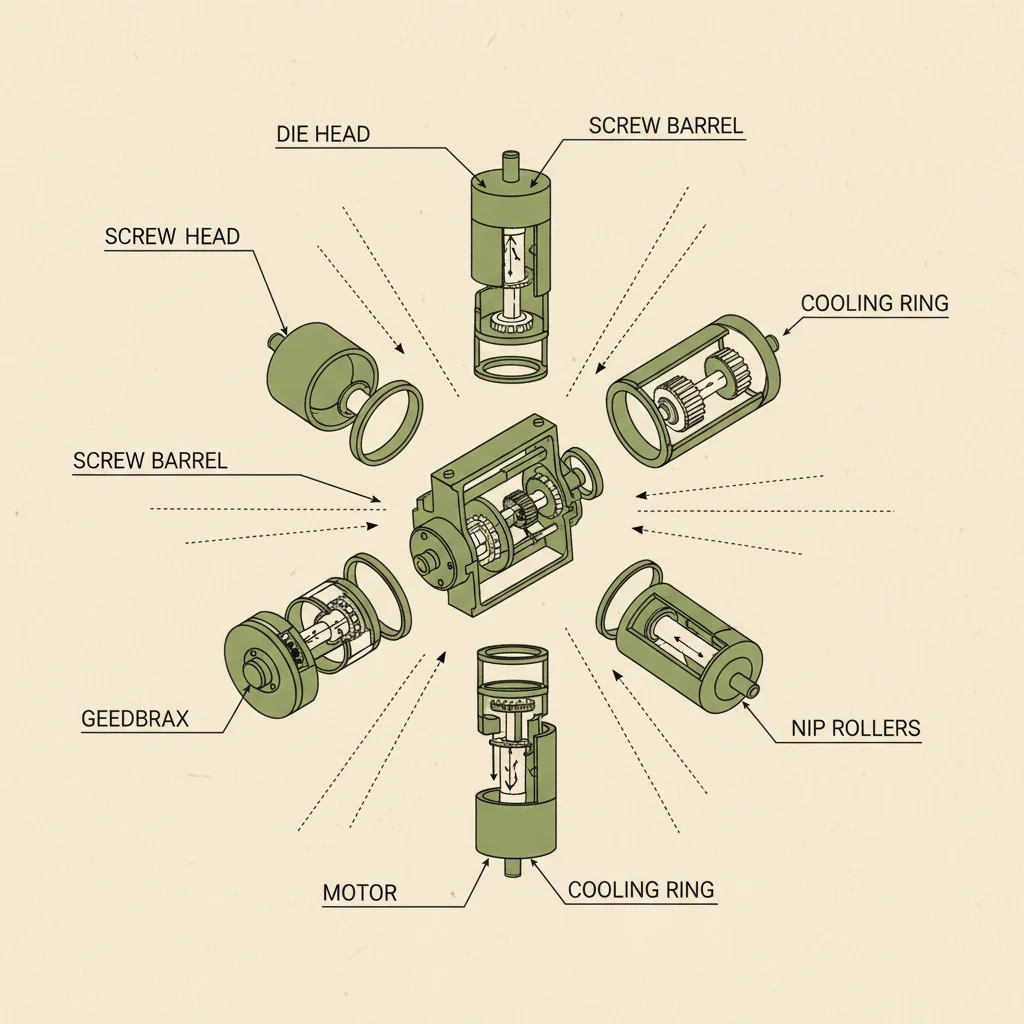
Several key components work in harmony to achieve a successful film blowing process. First, the extruder is responsible for melting and homogenizing the plastic resin. Its screw design and heating zones are critical for ensuring consistent melt quality. Second, the die determines the initial diameter and shape of the film bubble. Precise die design is paramount for achieving uniform thickness and avoiding defects.
Third, the air ring provides a controlled flow of cooling air to solidify the film bubble. The air ring’s design and airflow rate are crucial for controlling the film’s cooling rate and preventing wrinkles or uneven thickness. Fourth, the take-up system – comprising rollers and winding mechanisms – ensures smooth and consistent film collection and winding. Finally, control systems and sensors monitor and adjust process parameters, ensuring optimal film quality and efficiency.
These components are interconnected and require precise calibration to achieve the desired film properties. Variations in material, film thickness, and application require adjustments to these parameters. The skilled operation and maintenance of these components are vital for maximizing productivity and minimizing waste.
Global Applications and Use Cases
The applications of film blown from this film blowing process are incredibly diverse. In the packaging industry, it’s used to create bags, pouches, shrink wrap, and stretch film, protecting food, beverages, and consumer goods. Agricultural applications include greenhouse films, mulch films, and silage films, enhancing crop yields and protecting plants.
In construction, film is utilized as vapor barriers, waterproofing membranes, and protective sheeting. Medical packaging relies on film blowing to create sterile packaging for medical devices and pharmaceuticals. In remote industrial zones, the process is deployed to manufacture packaging for locally produced goods, reducing reliance on external suppliers.
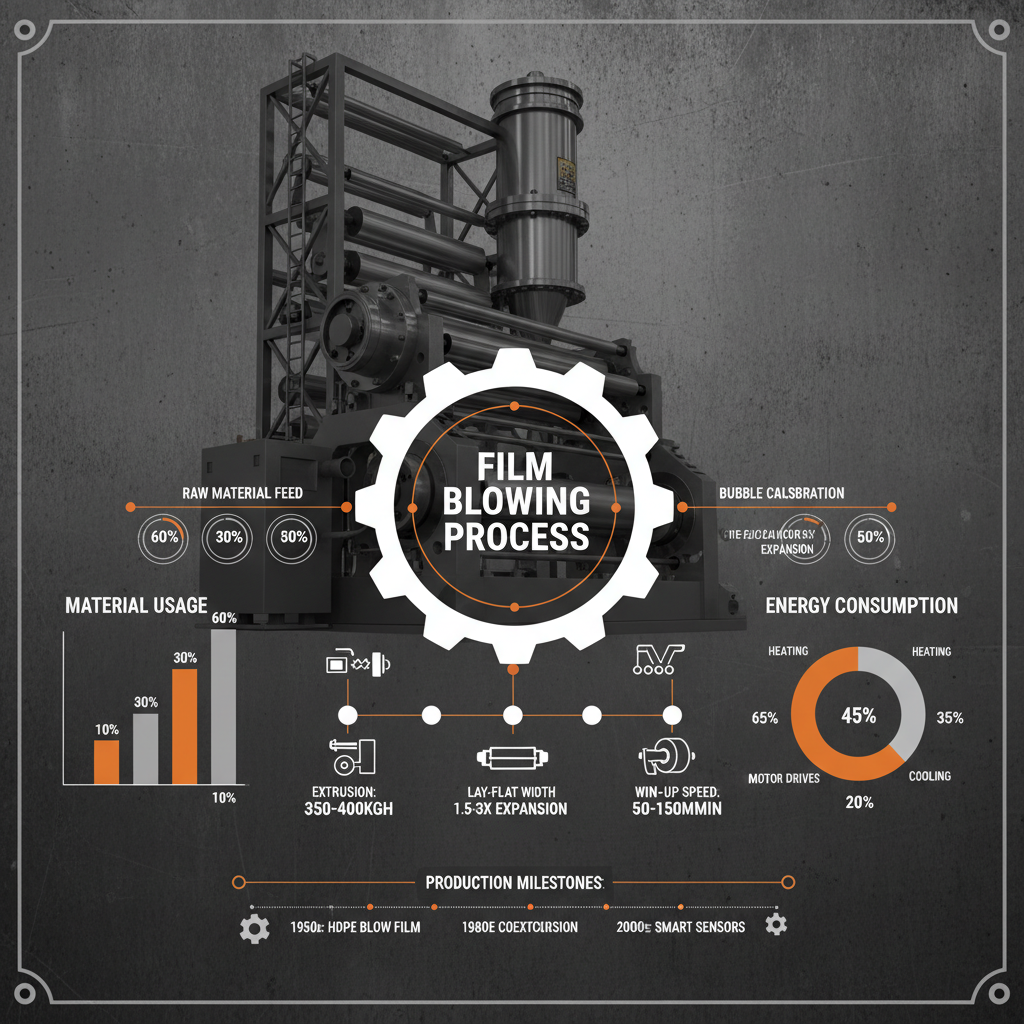
Film Blowing Process Efficiency Comparison
Advantages and Long-Term Value
The film blowing process offers a multitude of advantages. Cost efficiency is a major benefit, as it allows for high-volume production with relatively low material waste. Scalability is another key advantage, enabling manufacturers to easily adjust production capacity to meet changing market demands. Sustainability gains are achievable through utilizing recycled materials and developing biodegradable film options.
Beyond the tangible benefits, the process fosters innovation in materials science and contributes to a more reliable supply chain for essential goods. The use of advanced control systems enhances safety by minimizing the risk of process deviations and ensuring consistent product quality. Investing in this process ultimately builds trust with consumers and stakeholders.
Future Trends and Innovations
The future of film blowing process is focused on sustainability and automation. The development of bio-based polymers and biodegradable films is gaining momentum, reducing reliance on fossil fuels and minimizing plastic waste. Digitalization and the integration of artificial intelligence (AI) are optimizing process control, improving film quality, and reducing energy consumption.
Further innovations include the use of multi-layer film extrusion, enabling the creation of films with enhanced barrier properties and customized functionalities. The adoption of Industry 4.0 principles, such as predictive maintenance and real-time data analysis, will further enhance efficiency and reliability.
Green energy sources, like solar and wind power, are being increasingly integrated into film blowing facilities, reducing the carbon footprint of the process. These advancements signal a shift towards a more sustainable and efficient future for plastic film production.
Challenges and Solutions in Film Blowing
Despite its advantages, the film blowing process faces challenges. Maintaining consistent film thickness and avoiding defects, such as wrinkles and pinholes, can be difficult. Controlling the cooling rate and ensuring uniform inflation are also critical. Material variations and fluctuating environmental conditions can exacerbate these issues.
Solutions include implementing advanced process control systems with real-time monitoring and feedback mechanisms. Utilizing high-precision dies and air rings, coupled with sophisticated cooling technologies, can improve film quality. Employing advanced modeling and simulation techniques can optimize process parameters and predict potential issues.
Investing in operator training and providing ongoing technical support are also crucial for overcoming these challenges and maximizing the performance of the film blowing process. Collaboration between equipment manufacturers, material suppliers, and end-users is essential for driving innovation and addressing emerging challenges.
Summary of Solutions to Common Film Blowing Challenges
| Challenge Category |
Specific Problem |
Proposed Solution |
Implementation Cost (1-10) |
| Thickness Control |
Uneven Film Thickness |
Implement Closed-Loop Thickness Control |
7 |
| Defect Management |
Pinholes & Wrinkles |
Optimize Air Ring & Cooling System |
6 |
| Material Consistency |
Batch-to-Batch Variations |
Automated Resin Blending & Monitoring |
8 |
| Process Stability |
Fluctuating Environmental Conditions |
Enclosed Process Environment |
9 |
| Energy Efficiency |
High Energy Consumption |
Optimize Heating & Cooling Cycles |
5 |
| Operator Skill |
Lack of Skilled Personnel |
Comprehensive Training Programs |
4 |
FAQs
Film blowing and film casting are both extrusion processes for creating plastic film, but differ significantly. Film blowing produces a tubular film inflated with air, ideal for bags and pouches. Film casting produces a flat sheet, often used for higher-clarity applications like packaging and laminations. Blowing is generally faster and more cost-effective for high-volume production, while casting offers better optical properties and dimensional control.
Different polymers require distinct process parameters. Polyethylene (PE) is relatively easy to process, offering good strength and flexibility. Polypropylene (PP) requires higher temperatures and careful cooling to avoid warping. Polyester (PET) necessitates even higher temperatures and specialized cooling to achieve desired clarity and strength. Each polymer’s melt viscosity, thermal stability, and cooling characteristics impact optimal die design, temperature profiles, and air ring settings.
Wrinkles in blown film typically occur due to uneven cooling or excessive traction. Insufficient air pressure, variations in air ring temperature, or improper roller tension can all contribute. To prevent wrinkles, ensure uniform cooling across the bubble, maintain stable air pressure, adjust roller speeds to match film output, and optimize die lip settings for even material distribution. Regularly inspecting and maintaining the air ring is crucial.
The die design is critical for achieving uniform film thickness and consistent quality. Die lip gaps, angles, and surface finish influence melt flow and bubble stability. A properly designed die ensures even material distribution, minimizing thickness variations and preventing defects. Advanced die designs incorporate adjustable features for fine-tuning the process and accommodating different polymer types.
The air ring’s primary function is to cool the extruded plastic bubble, solidifying it into a stable film. It delivers a consistent and uniform flow of cooling air around the bubble. The air ring’s design and airflow rate directly impact cooling rate, film thickness, and wrinkle formation. Proper air ring maintenance and calibration are essential for achieving optimal film quality.
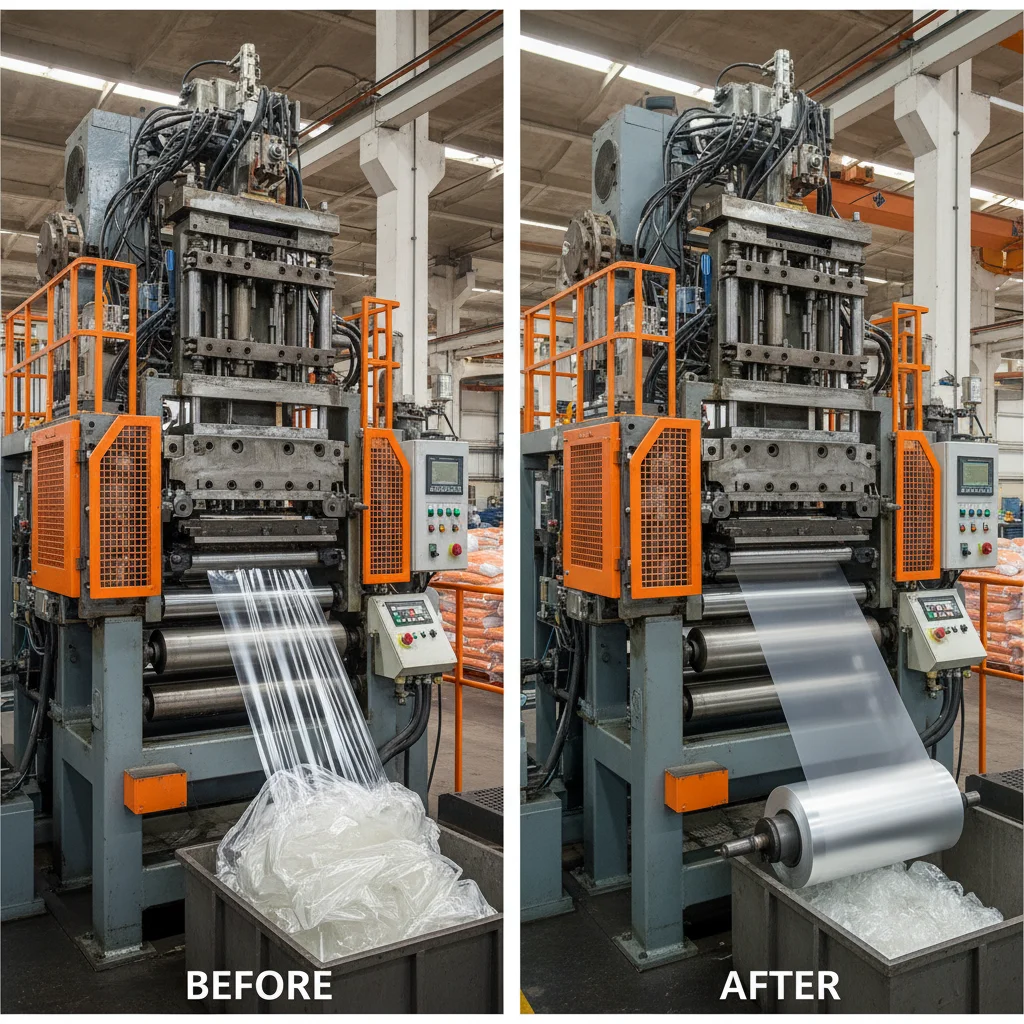
Reducing material waste involves optimizing process parameters, minimizing start-up scrap, and implementing efficient winding systems. Careful control of extrusion temperature, air pressure, and cooling rate minimizes defects. Utilizing scrap recycling systems to reclaim and reuse trimmed edges and start-up scrap can significantly reduce waste. Implementing automated monitoring and control systems helps maintain consistent quality and reduce off-spec material.
Conclusion
In conclusion, the film blowing process remains a cornerstone of the plastics industry, offering a versatile and efficient method for producing a wide range of plastic films. From its fundamental principles to its advanced applications, understanding this process is essential for professionals involved in manufacturing, packaging, and materials science. The ability to adapt to evolving market needs and incorporate sustainable practices will ensure the continued relevance of film blowing in the years to come.
Looking ahead, innovation in materials, automation, and process control will drive further advancements in film blowing technology. Prioritizing sustainability through the use of recycled materials and biodegradable polymers is crucial. For those seeking to optimize their film blowing operations or explore cutting-edge solutions, we invite you to visit our website: www.cnchsj.com.