The world of packaging relies heavily on efficient and reliable film production, and the blown film extruder is at the heart of this process. These machines create plastic film used in a vast range of applications, from food packaging to agricultural films, industrial liners, and beyond. The demand for high-quality, consistently produced plastic film is constantly growing, driven by population increases, evolving consumer habits, and the ever-present need for protective and versatile materials.
Globally, the plastic film market is a multi-billion dollar industry, projected to continue its growth trajectory in the coming years. According to market research reports, the Asia-Pacific region dominates both production and consumption of plastic film, with China leading the way. The versatility of blown film, coupled with advances in polymer science, creates a dynamic landscape for innovation and improvement in extruder technology.
Understanding the principles behind a blown film extruder – its components, operation, and applications – is crucial for professionals in the packaging, plastics, and manufacturing industries, as well as for anyone involved in material science or supply chain management. Optimizing these systems leads to reduced waste, increased efficiency, and superior product quality.
The Fundamentals of Blown Film Extruders
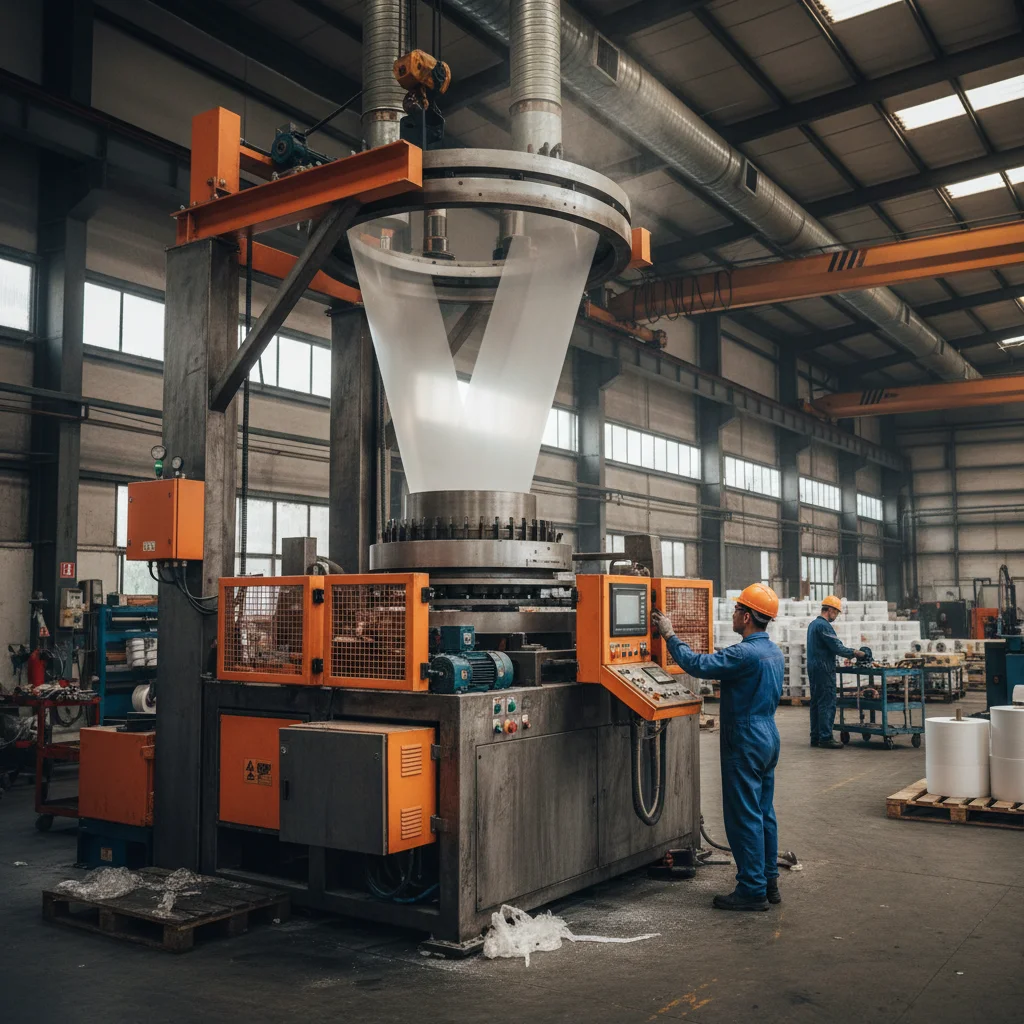
A blown film extruder operates by melting plastic resin and forcing it through a circular die. This creates a tube of plastic, which is inflated with air to the desired diameter and thickness. As the tube rises, it’s cooled and collapsed, then wound onto rolls. This process differs from cast film extrusion, providing distinct properties to the finished product.
The inherent simplicity of the process, combined with its ability to produce seamless, flexible film, has made it a cornerstone of the packaging industry. Variations in die design, cooling systems, and polymer choices allow for the creation of a wide range of film types with tailored properties.
Key Components of a Blown Film Extruder
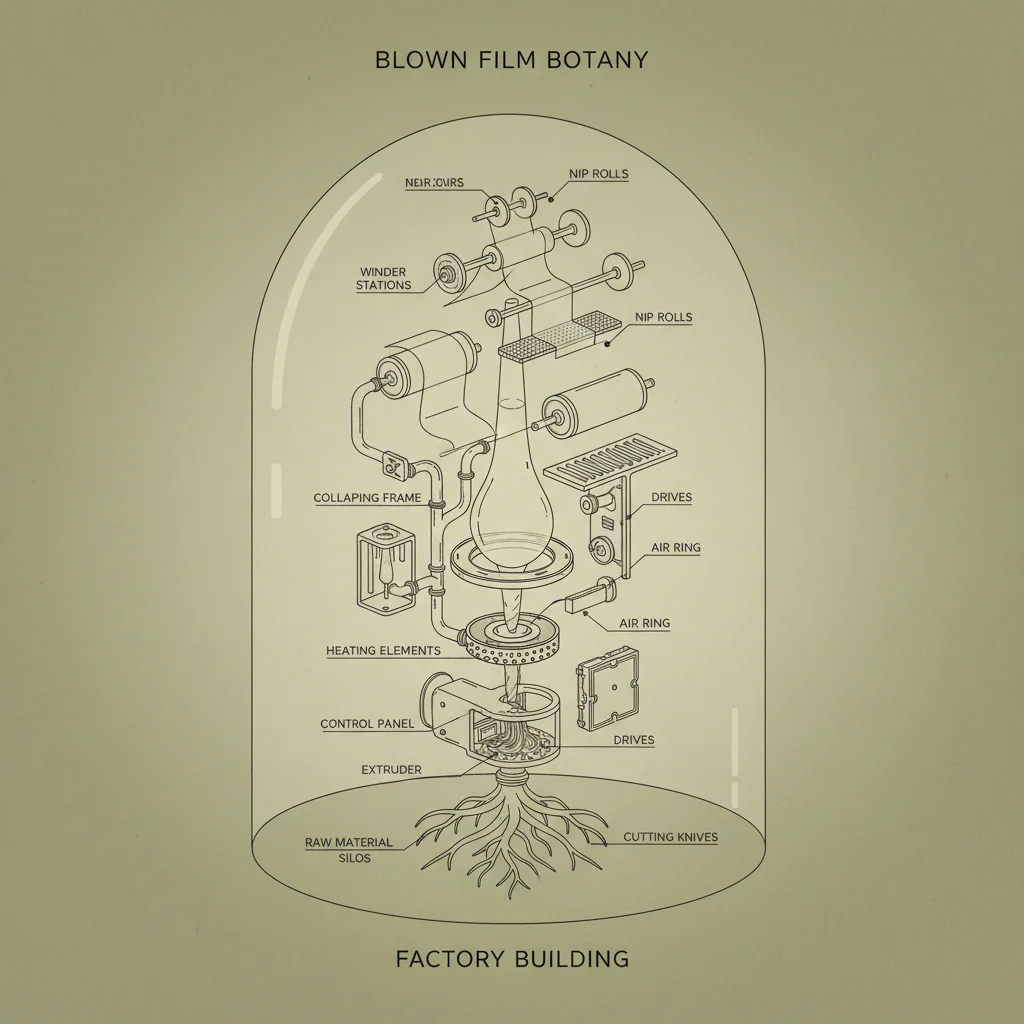
The extruder itself is the core component, responsible for melting and conveying the plastic resin. The die, typically a spiral mandrel, shapes the molten plastic into a tube. A critical element is the air ring, which provides a uniform flow of cooling air around the bubble. The nip rollers collapse and flatten the bubble, and the take-up system winds the finished film onto rolls.
Furthermore, precise control systems are vital. These include temperature controllers, pressure sensors, and programmable logic controllers (PLCs) that monitor and adjust the process parameters for consistent film quality. The selection of these components is dependent on the intended film application and the types of polymers being processed.
Beyond these core components, auxiliary equipment such as resin feeders, dust collection systems, and film inspection systems play essential roles in ensuring efficiency and product quality. The integration of these systems defines the overall performance and reliability of the blown film extruder.
The Blown Film Extrusion Process: A Detailed Look
The process begins with plastic resin being fed into the extruder, where it's heated and melted through a combination of friction and external heating elements. This molten plastic is then forced through the die, creating a tubular shape. The ratio of die diameter to die gap significantly influences the final film characteristics.
As the tube emerges from the die, it’s inflated with air, stretching the plastic both vertically and radially. This ‘blowing’ process determines the film’s thickness and width. Precise control of the air pressure, draw ratio (the ratio of the bubble’s diameter to the die diameter), and cooling rate are crucial for achieving desired film properties.
After cooling, the film is flattened by nip rollers and wound onto rolls. Modern extruders often include in-line film treatment systems, such as corona treatment, to improve ink adhesion for printing or other surface modifications. Monitoring and adjusting these variables are key to consistent, high-quality film production.
Performance Metrics for Evaluating Extruders
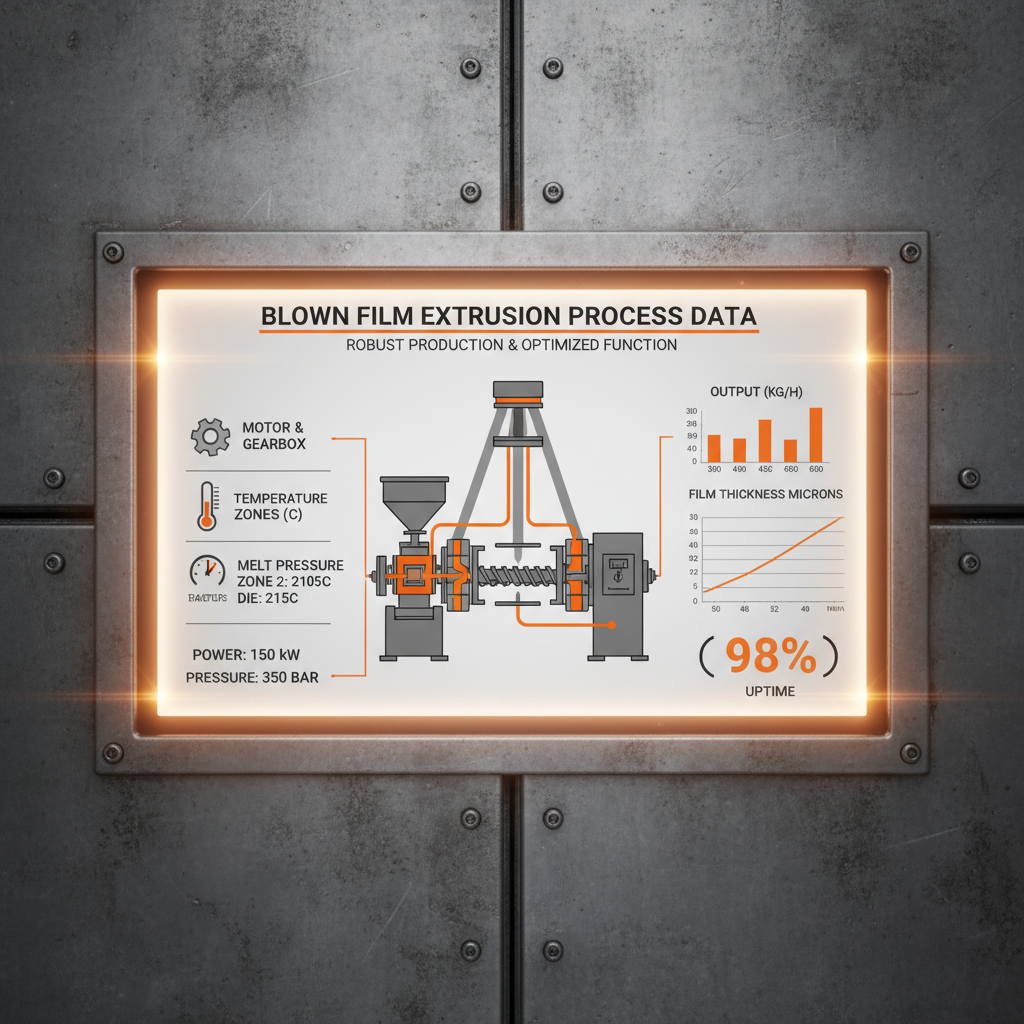
Evaluating the performance of a blown film extruder involves considering several key metrics. Throughput, measured in kilograms per hour (kg/hr), indicates the extruder’s production capacity. Film thickness consistency, measured as the standard deviation of thickness measurements, reflects process stability.
Die head deformation, due to unequal pressure distribution, impacts film quality. Another key metric is energy efficiency, measured in kilowatt-hours per kilogram of film produced. A lower energy consumption rate indicates a more efficient and cost-effective operation.
Extruder Performance Metrics Comparison
Global Applications of Blown Film Technology
Blown film technology finds widespread application in the packaging of food and beverages, offering barrier properties against moisture, oxygen, and contaminants. Agricultural films, used for greenhouse coverings and mulch films, rely on the durability and UV resistance of blown film.
Industrial applications include the production of liners for containers, protective wrapping for goods in transit, and geomembranes for environmental containment. In regions with limited infrastructure, the affordability and versatility of blown film packaging are particularly valuable.
Advantages and Economic Benefits
Blown film extruders offer significant economic benefits, including reduced material waste due to the efficient conversion of resin into film. The speed and scalability of the process allow for high-volume production, lowering per-unit costs.
Sustainability is increasingly important, and modern extruders are designed to minimize energy consumption and incorporate recycled materials. The resulting films offer robust protection for goods, reducing spoilage and loss during transportation, contributing to a more sustainable supply chain.
Beyond economics, the reliability of blown film packaging ensures product safety and integrity, building trust with consumers and enhancing brand reputation. Investment in high-quality extrusion technology yields long-term returns in efficiency, cost savings, and market competitiveness.
Future Trends and Technological Advancements
The future of blown film extrusion is focused on sustainability and efficiency. The development of biodegradable and compostable polymers is driving innovation in film materials. Advancements in die technology are enabling the production of thinner, stronger films with improved barrier properties.
Digitalization plays a key role, with smart sensors and data analytics providing real-time process monitoring and optimization. Automation, including robotic handling and automated roll changing, further enhances productivity and reduces labor costs. The integration of AI and machine learning promises even more sophisticated control and predictive maintenance capabilities.
Research into alternative energy sources for powering extruders, such as solar and wind energy, will contribute to a lower carbon footprint. Furthermore, the development of multi-layer film structures with enhanced functionality, such as active packaging with antimicrobial properties, continues to expand the applications of blown film technology.
FAQS
Blown film extrusion creates a tubular film that's inflated, resulting in higher clarity and better transverse strength, while cast film is flattened directly, offering superior flatness and gloss. Blown film is generally more suited for packaging requiring elasticity and impact resistance, whereas cast film is preferred for labels and specialized applications demanding precision dimensions.
The die design, specifically the spiral mandrel and die gap, significantly affects film thickness distribution, bubble stability, and overall film quality. A well-designed die ensures uniform melt flow, minimizes stress concentrations, and allows for precise control of film dimensions. Variations in die design cater to different polymer types and film applications.
A wide range of polymers can be processed, including polyethylene (PE), polypropylene (PP), polyvinyl chloride (PVC), and polyethylene terephthalate (PET). The choice of polymer depends on the desired film properties, such as barrier properties, strength, clarity, and cost. Blends and copolymers are also commonly used to tailor film performance.
Optimizing heating zones, utilizing energy-efficient motors and drives, and implementing waste heat recovery systems can significantly improve energy efficiency. Regular maintenance, including cleaning and lubrication, also reduces energy consumption. Additionally, selecting a modern extruder with advanced control systems can optimize process parameters for minimal energy usage.
The air ring provides a uniform flow of cooling air around the extruded film bubble. This controlled cooling is crucial for solidifying the plastic and maintaining the desired bubble shape and dimensions. Proper air ring design and adjustment ensure consistent film thickness and prevent defects like wrinkling or blocking.
The draw ratio, the ratio of the bubble diameter to the die diameter, influences film strength and orientation. Higher draw ratios generally result in increased tensile strength in the machine direction but can also lead to thinner film and potential for defects. Careful optimization of the draw ratio is essential for achieving desired film properties.
Conclusion
In conclusion, the blown film extruder remains a vital piece of equipment in the modern packaging and plastics industries. Its versatility, efficiency, and ongoing technological advancements continue to drive innovation in film production. Understanding the intricacies of the process, from material selection to process control, is crucial for maximizing performance and achieving optimal results.
Looking ahead, the future of blown film extrusion is inextricably linked to sustainability and circular economy principles. Embracing biodegradable materials, optimizing energy efficiency, and implementing closed-loop recycling systems will be essential for ensuring the long-term viability of this critical technology. Visit our website at www.cnchsj.com to learn more about our advanced blown film extrusion solutions.